Central Dogma of Molecular Biology: Complete Explanation with Enzymes
Central Dogma of Molecular Biology
Introduction
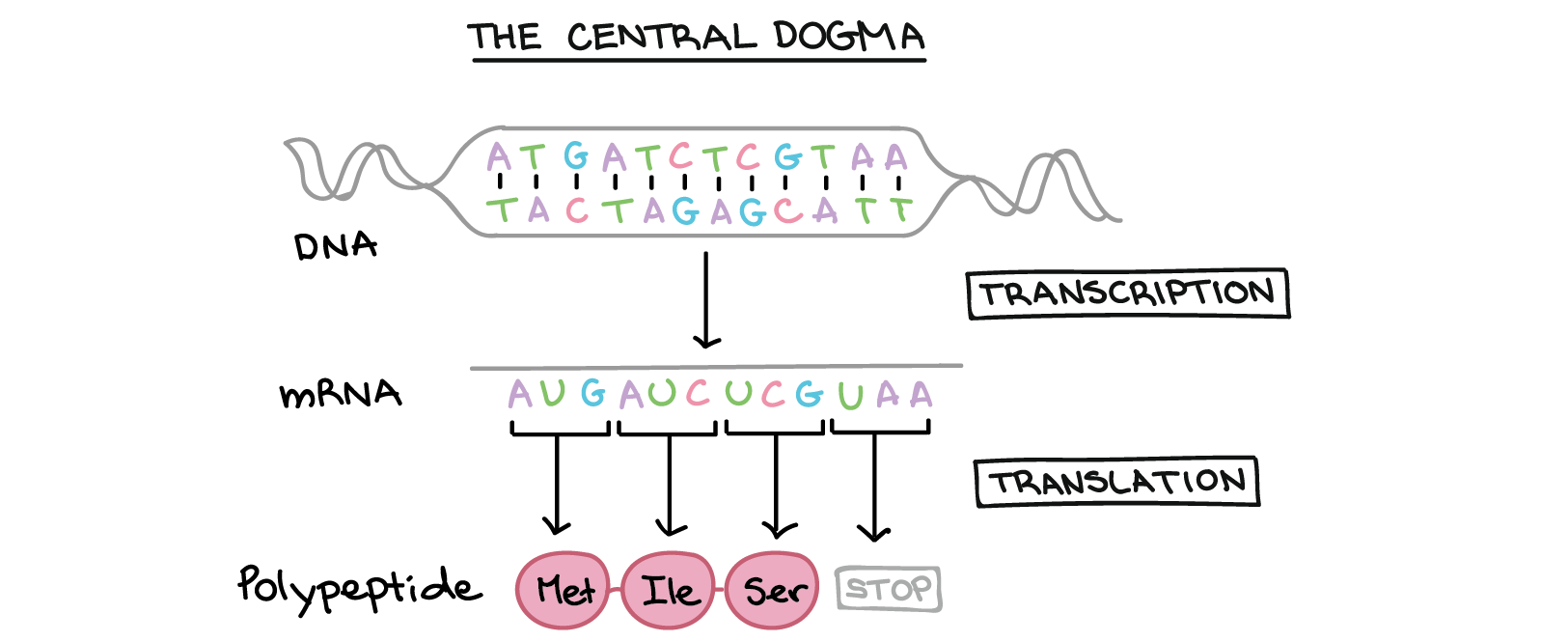
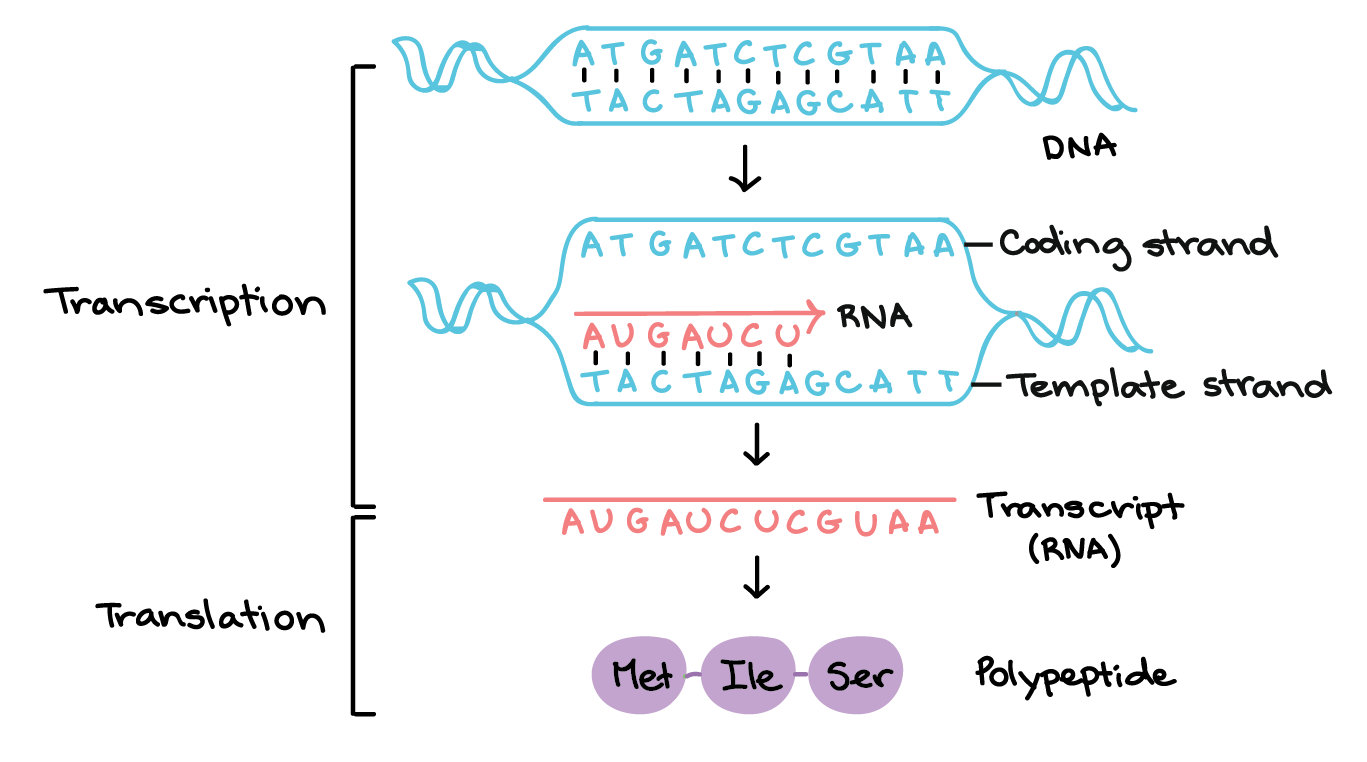
Modern molecular biology rests on one unifying principle: the Central Dogma of Molecular Biology. Proposed by Francis Crick, it explains how genetic information flows inside living cells and how that information becomes structure, function, and life itself.
In its classical form, the central dogma states:
DNA → RNA → Protein
This flow is not automatic. Every step is executed, regulated, and safeguarded by specific enzymes. Understanding these enzymes transforms the central dogma from a memorized pathway into a mechanistic, logical system.
DNA: The Genetic Information Store
DNA (Deoxyribonucleic Acid) is the primary genetic material of most organisms.
It is:
-
Double-stranded and antiparallel
-
Composed of nucleotides with bases A, T, G, and C
-
Chemically stable and ideal for long-term storage
Genes are specific DNA sequences that encode proteins or functional RNAs. DNA itself does not perform cellular work; instead, it stores instructions that must be copied and interpreted.
DNA Replication (DNA → DNA)
Enzymes Involved in Replication
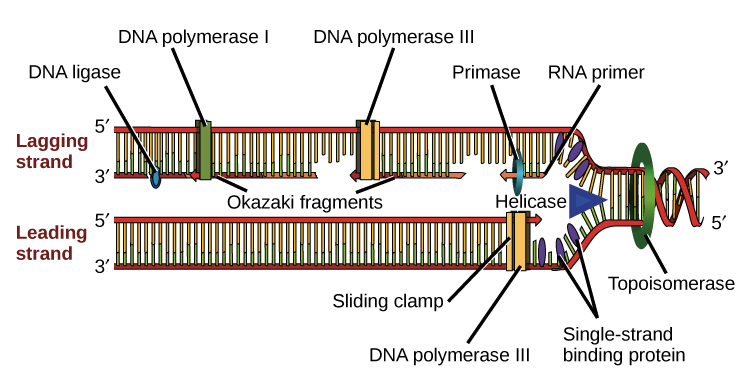
DNA replication ensures that genetic information is faithfully passed to daughter cells. It is a semi-conservative process, meaning each new DNA molecule contains one parental strand and one newly synthesized strand.
Major enzymes of DNA replication
- DNA Helicase
Unwinds the double helix by breaking hydrogen bonds between base pairs, creating the replication fork. This process requires ATP.
- Single-Strand Binding Proteins (SSBs)
Bind to separated DNA strands, preventing re-annealing and stabilizing the single-stranded template.
- DNA Primase
Synthesizes short RNA primers that provide a free 3′-OH group. DNA polymerase cannot initiate synthesis without these primers.
- DNA Polymerase
Catalyzes DNA synthesis in the 5′ → 3′ direction using complementary base pairing.
-
Prokaryotes: DNA polymerase III (main enzyme), DNA polymerase I (primer removal)
-
Eukaryotes: DNA polymerase α, δ, and ε
Most DNA polymerases possess 3′ → 5′ exonuclease activity, allowing proofreading and high fidelity.
- DNA LigaseJ
Joins Okazaki fragments on the lagging strand by forming phosphodiester bonds.
- Topoisomerase (DNA Gyrase)
Relieves torsional stress and supercoiling ahead of the replication fork by cutting and rejoining DNA strands.
Replication preserves information but does not express it.
Transcription (DNA → RNA)
- Enzymes of Transcription

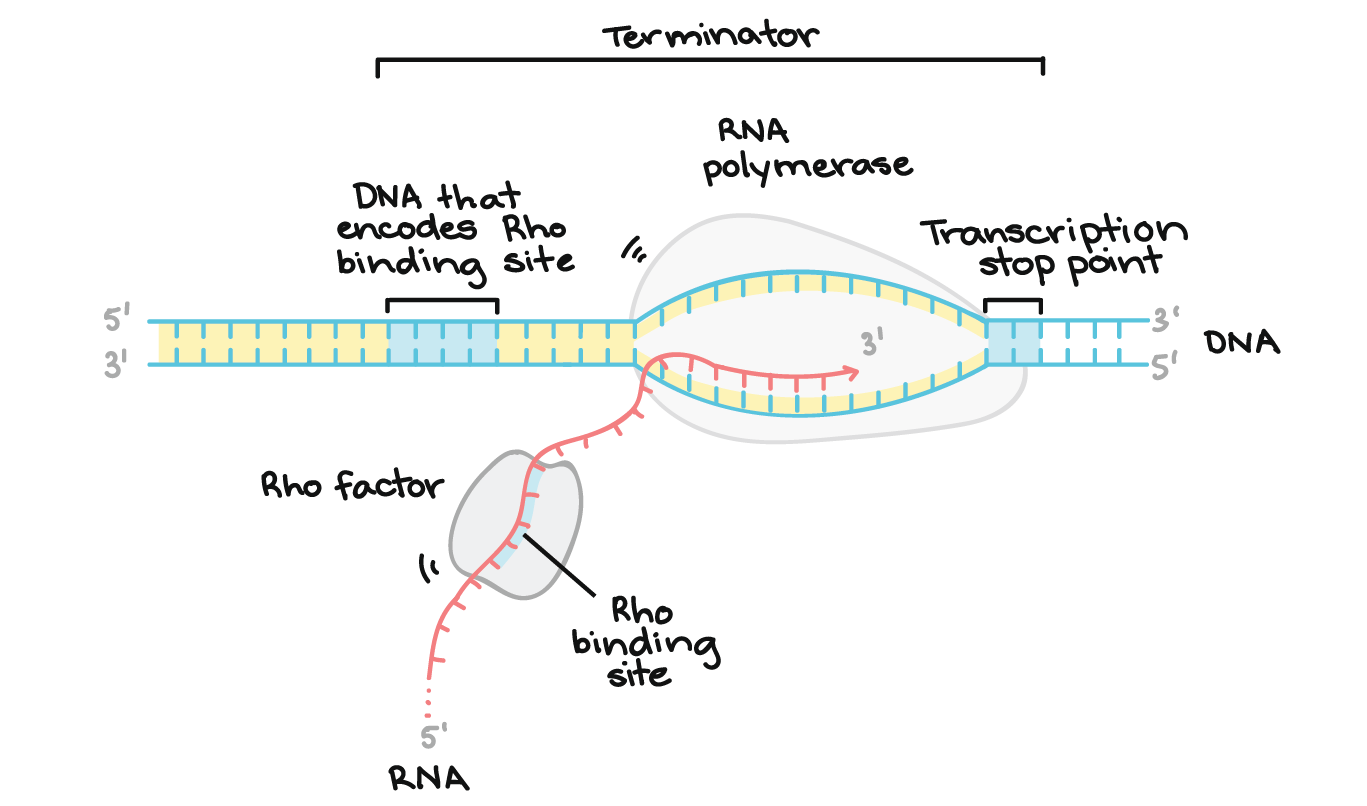
Transcription is the first step of gene expression, where genetic information is copied from DNA into RNA.
Key enzyme: RNA Polymerase
RNA Polymerase
-
Synthesizes RNA in the 5′ → 3′ direction
-
Uses DNA as a template
-
Does not require a primer
-
Performs limited proofreading
In eukaryotes:
-
RNA polymerase I → rRNA
-
RNA polymerase II → mRNA
-
RNA polymerase III → tRNA and small RNAs
Transcription Factors
In eukaryotes, transcription factors assist RNA polymerase in promoter recognition and initiation. They regulate when and how frequently genes are transcribed.
RNA Processing (Eukaryotes Only)
The primary RNA transcript (hnRNA) must be processed before translation.
- Enzymes and complexes involved
5′ Capping Enzymes
Add a 7-methyl guanosine cap to the 5′ end of mRNA. This protects RNA from degradation and helps ribosome binding.
Poly-A Polymerase
Adds a poly-adenine tail to the 3′ end, increasing stability and aiding nuclear export.
Spliceosome
A large ribonucleoprotein complex composed of snRNA and proteins. It removes introns and joins exons. Alternative splicing allows a single gene to produce multiple proteins.
Translation (RNA → Protein)
Enzymes of Protein Synthesis


Translation converts nucleotide language into amino-acid language.
Major enzymatic components:
- Ribosome (Ribozyme)
The ribosome is the site of protein synthesis. It is composed of rRNA and proteins, but the catalytic activity (peptide bond formation) is carried out by rRNA, making it a ribozyme. - Aminoacyl-tRNA Synthetase
Charges each tRNA with its correct amino acid using ATP. There is a specific enzyme for each amino acid. This step ensures accuracy of the genetic code. - Peptidyl Transferase
Catalytic activity of rRNA within the ribosome that forms peptide bonds between amino acids during elongation. - Translation begins at the start codon AUG (methionine) and ends at stop codons UAA, UAG, or UGA.
Genetic Code: Enzymatic Precision
The genetic code is:
-
Universal (with minor exceptions)
-
Degenerate but unambiguous
-
Non-overlapping
Enzymes, especially aminoacyl-tRNA synthetases, ensure that codons are translated correctly, protecting cells from translational errors.
Exceptions to the Central Dogma
Specialized Enzymes
- Reverse Transcriptase
- RNA-Dependent RNA Polymerase
Despite these exceptions, information never flows from protein to nucleic acids.
Biological Significance of Enzymes in the Central Dogma
Each enzyme acts as a checkpoint:
-
Replication enzymes preserve information
-
Transcription enzymes copy selected genes
-
Processing enzymes refine messages
-
Translation enzymes execute genetic instructions
Errors at any step can lead to mutations, diseases, or cell death, highlighting the importance of enzymatic control.
Behind "The Biotechnology Journal"
Knowledge shared!!
⥁

Comments
Post a Comment